



Description
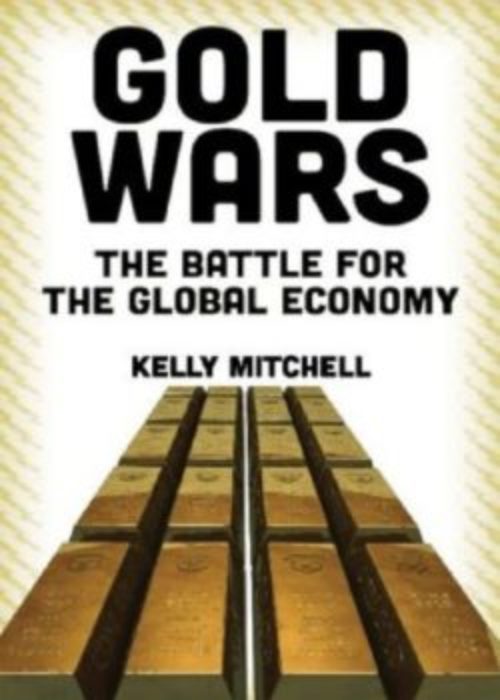
The number of key developments that have occurred since the first edition of Gold Wars demands a second edition with a full suite of updates.
Most notably, the BRICS alliance, led by China and Russia, seems to be proceeding—albeit at a slower pace than expected. A forensic analysis suggests that China and Russia do not want to move directly against the United States. When a country as large and powerful as the United States is in a downward slide, when their government is going haywire, when it’s completely taken over and co-opted by Zionist influences, when it’s controlled by foreign agents, and when the citizenry is desperate for a populist leader, it’s a bad idea to go against a country like that.
A country in such a situation will not act rationally. And clearly the United States, governmentally, has not acted rationally, in the citizen interest, for at least 30 years. But the irrationality is beginning to spiral out of control. It’s gone from being locked into a partisan push-pull game to morphing into a more unhinged and increasingly erratic rogue state. However, a desperate titan is still a titan. So it would appear that China and Russia are standing back—allowing the U.S. to hoist itself on its own petard.
This is a common characteristic of China—playing the long game, but less so for Russia. This change should likely be attributed to the leadership of Vladimir Putin, who’s far more cool and level-headed than his predecessors and his image in the Western propaganda stream.
At any rate, the balance of power is shifting. But as much as some would like to see these changes come quickly, insofar as they concern the most powerful forces in human society that are doing the moving and reshaping, it might take another 20 or 25 years to fully make the shift. Possibly longer.
We should be happy that it’s moving slowly, because when large forces move rapidly, things get broken. People get broken. Lives get destroyed. Empires in decline have a bad tendency to start wars—already a notable habit of the United States. Best to let the decline continue at a slow pace.
Among the more critical developments: a slew of digital currencies are being rolled out. The Chinese one is the most developed. While these have their own very intense downsides, they’re also being used to restructure the power lines and to incorporate gold as a cornerstone element.
Meanwhile, central banks and people are accumulating gold in China, Russia and other countries as well, with pokey little Poland even playing an interesting role. Markets are opening up to physical gold, and there may be a shift from paper to physical, which would probably signal a huge upward force in the physical gold price. Even central banks are on a massive gold buying spree, which is an important aspect of what’s covered in this new edition.
One of the most critical questions in the current climate is addressed herein: Is World War III inevitable? Has it, in fact, already begun?
Meanwhile, crypto has entered the scene with Bitcoin as the digital counterweight to gold in the alternate financial markets, with Ethereum handling the role of silver. This analogy extends itself in multiple ways: Gold just sits there like Bitcoin and simply functions as money. But it’s difficult to exchange. It’s difficult to use as currency and to use to buy things. Silver, on the other hand, moves quickly. It’s more volatile. And it has many, many uses in industrial applications, just like Ether does in financial applications because of its programmable aspect.
Unfortunately, central bank digital currencies (CBDCs) and government digital currencies are now being pushed by the powers that be and are very likely to take over the crypto-sphere. Opportunities exist for investors (and very nimble traders), but there’s a big dark downside to society, which is the government’s ability to completely surveil financial transactions and even to control the public’s ability to spend our money as we wish. Programmable money is a death knell for freedom, and it should be fought.
The third new section of this edition goes over gold and the financial markets as they exist today, especially the U.S. Treasuries market, the largest financial market in the world. Gold manipulation has gone more digital, more high frequency trading (HFT). There was also a flurry of activity about auditing Fort Knox. There’s a slight possibility of gold confiscation, although it probably wouldn’t be that aggressively pursued, but it might push some people who have some gold to turn it in to the government.
Perhaps most importantly for the overall financial markets is the narrative shift in the gold market at the highest levels of banking and financial structures. The IMF, the Bank of International Settlements in the Western markets are perhaps under duress from China’s actions and are now acknowledging gold’s role in the future via a number of methods. Finally, one of the most insightful analysts in the gold and financial markets today weighs in on the coming deep structural changes to the modern system. And he’s calling it Bretton Woods III.


Reviews
There are no reviews yet.
Only logged in customers who have purchased this product may leave a review.